
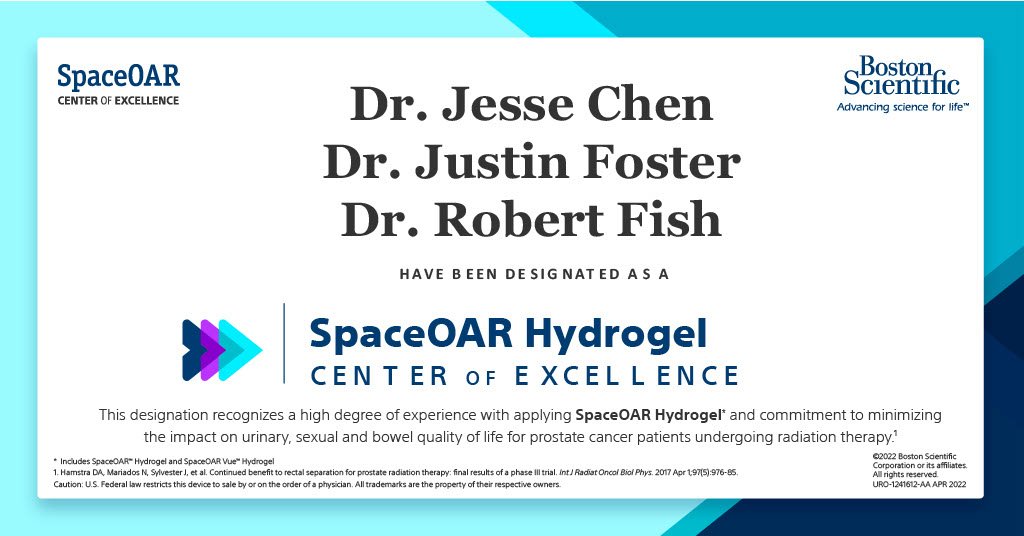
Frequently Asked Questions:
Hydrogel Spacing for Prostate Radiation
What is a hydrogel spacer?
A hydrogel spacer is an absorbable, liquid-based gel designed to create a temporary cushion between the prostate and the rectum. By adding this extra space, the spacer helps protect the rectum from high doses of radiation during prostate cancer treatment. The body naturally absorbs the gel over several months.
Why is a spacer important for my treatment?
The goal of radiation therapy is to destroy cancer cells while protecting healthy surrounding tissue. Because the prostate and rectum sit directly next to each other, the rectum is often at risk of accidental radiation exposure, which can lead to long-term bowel complications.
Key benefits include:
Reduced Rectal Dose: Pushing the rectal wall further away minimizes radiation exposure.
Improved Quality of Life: Clinical data shows that using a spacer helps maintain normal bowel, urinary, and sexual function following treatment.
What are the risks?
As with any medical procedure, there are potential risks. While uncommon, complications may include:
Temporary discomfort or pain at the injection site.
Infection or local inflammation.
Inadvertent injection into nearby structures (such as the bladder or rectum).
Urinary retention or rectal urgency.
What is the gel made of? Is it safe?
The spacer consists a soft, water-based gel. This material is biocompatible, meaning it is designed to exist safely in the body without causing a reaction. Similar hydrogel materials have a long history of safe use in other medical procedures, such as eye, brain, and spinal surgeries.
Where is the procedure done and how long does it take?
The spacer is typically placed during a brief outpatient visit at Duke Regional Hospital. The procedure is minimally invasive, allowing you to return home the same day.
Which types of radiation treatment use spacers?
Hydrogel spacers are versatile and can be used with almost all types of prostate radiation therapy, including external beam radiation and brachytherapy.
How soon can I return to my normal activities?
Most patients return to their regular daily routine shortly after the procedure. Your care team will provide specific instructions regarding any temporary lifting or activity restrictions.
How long does the gel stay in my body?
The spacer remains stable and in place for about three months during your active radiation phase. After approximately six months, the gel is naturally broken down and safely cleared from your body through your urine.
Is the spacer covered by insurance?
Hydrogel spacers are covered by many private insurance plans and are often reviewed by Medicare on a case-by-case basis. We recommend verifying your specific benefits with your insurance provider prior to your scheduled procedure.